
It happened! It’s your first payday and your bank balance says “salary”. There’s the hard-earned money that you’ve never had before. It gives you a sense of accomplishment. It screams independence. Freedom.
But wait, you now have responsibilities. Bills to deal with. Debts, like student loans, to pay. Savings goals to consider. Long-term things to think about like pensions that seem so, so, so far away.
It's overwhelming.
“Best to avoid it. Spend it all”, one voice in your head says. You know that is not the best idea. But where to start?
Before diving into the practicalities, reflect on what you value, what you aspire to and what life goals and stages you see for yourself. Anchor your money decision in these.
Now, here goes: some practical money considerations when you start your first job.
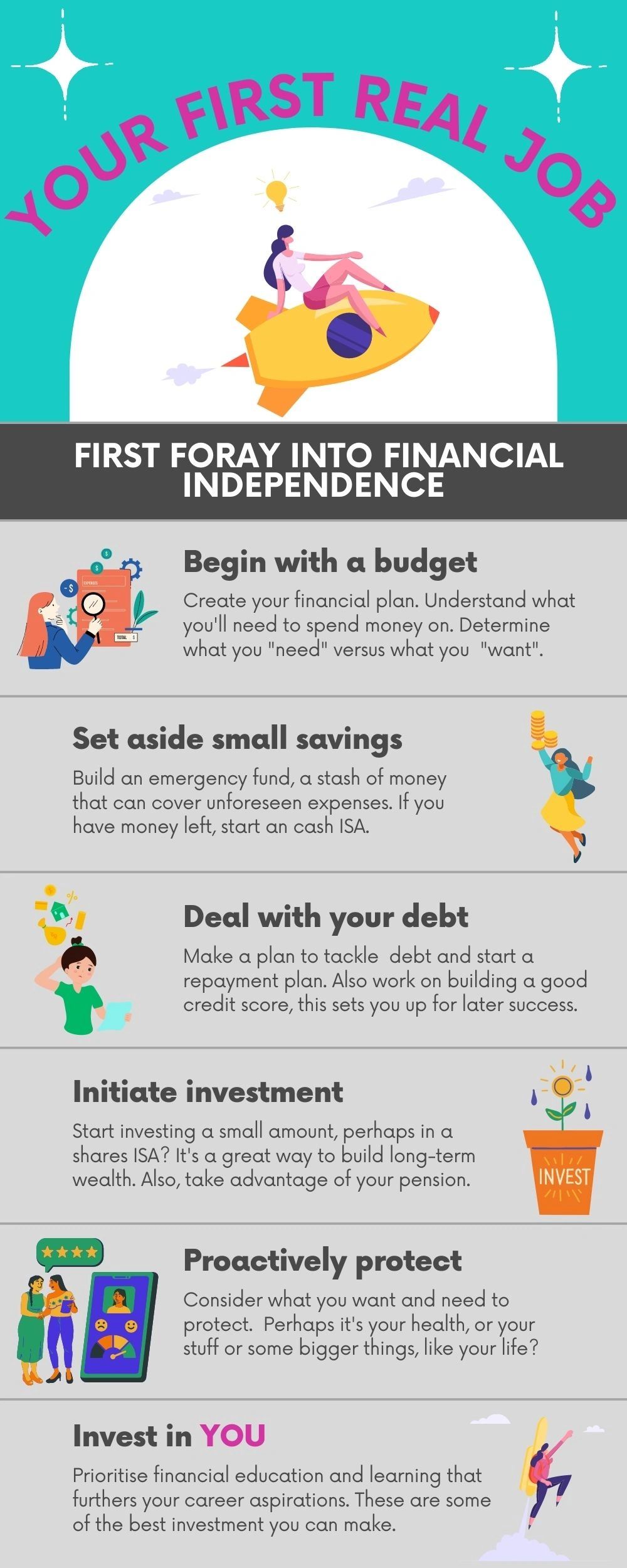
A budget is your financial plan. It’s the decisions you make, about what to spend your salary on. Creating a budget overview is the first thing to do when you get your first real job.
How do you do this? Start with understanding how much money you have coming in and how much is going out. List all your income sources, including salary and any other sources of income (money from your YouTube channel, or other side-gigs). Then, list all your expenses, like rent, utilities, groceries, transportation, and entertainment.
While you’re doing this, ask yourself: is this a “need” or a “want” expense?
Need expenses are things you can’t get around spending, like rent, bills, debt repayments, food, etc. Want expenses are things you don’t need; maybe the Uber you keep taking home after a night out? Everyone’s need and want expenses are different. For instance, as a mother of two toddlers, if someone told me my cup of coffee was a ‘want’, I’d probably look incredulous and walk away!
The excess: Ideally, you have some money left after you’ve covered your expenses. This is your excess. Allocate that towards savings and investments.
Knowing your budget helps you set realistic financial goals and makes sure you're not overspending.
With some of your excess, consider building an emergency fund. An emergency fund is money that you set aside for unexpected expenses, such as car repairs. Ideally your emergency fund covers 3-6 months’ worth of your “want” expenses. Knowing you have money set aside to cover unexpected expenses, should give you some reassurance.
Another thing to start planning and saving for are your other money goals. Perhaps that’s a holiday, or other big goals you're planning in the future. To help, consider opening a savings account or a savings ISA. The latter gives you tax benefits, as you don’t pay tax on the interest earned.
If you have any debt, such as student loans or credit card debt, put a plan you can stick to in place to pay it off. There are different ways to do this, but best is to tackle the highest interest rate first.
Also, start building a good credit score. It can help you get better rates on loans and credit cards in the future. This means paying bills on time, ideally by direct debit.
Investing your excess money is a great way to build wealth over time, especially for your longer-term goals; maybe that first flat? Consider opening a stocks and shares ISA. It can help you achieve your long-term financial goals and is a tax-efficient way to invest in the stock market.
If your employer offers a pension scheme, take it. Your employer will mostly likely contribute to this, which is income for your long-term. Pensions are a very tax efficient way to save for that day in the distant future where you end the career you’re just starting.
Insurance helps you protect against the rare moments in life when something goes wrong. Now, you’re thinking: I don’t need this. I’m invincible and I have nothing to protect. You may think this, but surprises happen and it’s better to pay a little upfront to protect against a big downside. Consider health insurance. Or property insurance. Or travel insurance. Or if you’re serious life insurance.
You are your best investment. Improve your skills and knowledge. This can help you advance your career and increase your earning potential.
Also, invest in your financial education, as it can help you make better financial decisions and achieve your financial goals. Consider getting a coach to help you navigate and achieve the financial success you’re seeking.
Landing that first job is exciting. It gives you a sense of where you’re going and lets you really take stock of your financial situation. It’s exhilarating and scary.
Have a go at the practical tips above. You’ve got this!
Want to invest in yourself? Or still feeling overwhelmed?
Aila can help.
Try Aila now to get personalised money prompts that make you more comfortable and confident managing your money.
Follow Aila's social media for more money tips:
Download Aila and start building better money habits with personalised guidance, action tracking, and expert support.
Download Aila Free