

While divorce is not something you think about on your wedding day, it’s common knowledge that divorce rates are rising; 1 in 5 marriages end before their 10th wedding anniversary and over 40% of marriages end before their silver wedding anniversary (UK ONS, 2021).
Love, like life, is unpredictable. Whether divorce was your idea or not, money won’t be the first thing you think about. It might be loss, anger, relief, grief; but it won’t be money.
Yet especially in these moments, when emotions run high, money matters can quickly become a source of contention. And if money wasn’t your ‘domain’ in the relationship, then it’s even more important to know what you’re doing and have a team around you to guide and advise you through this hard time.
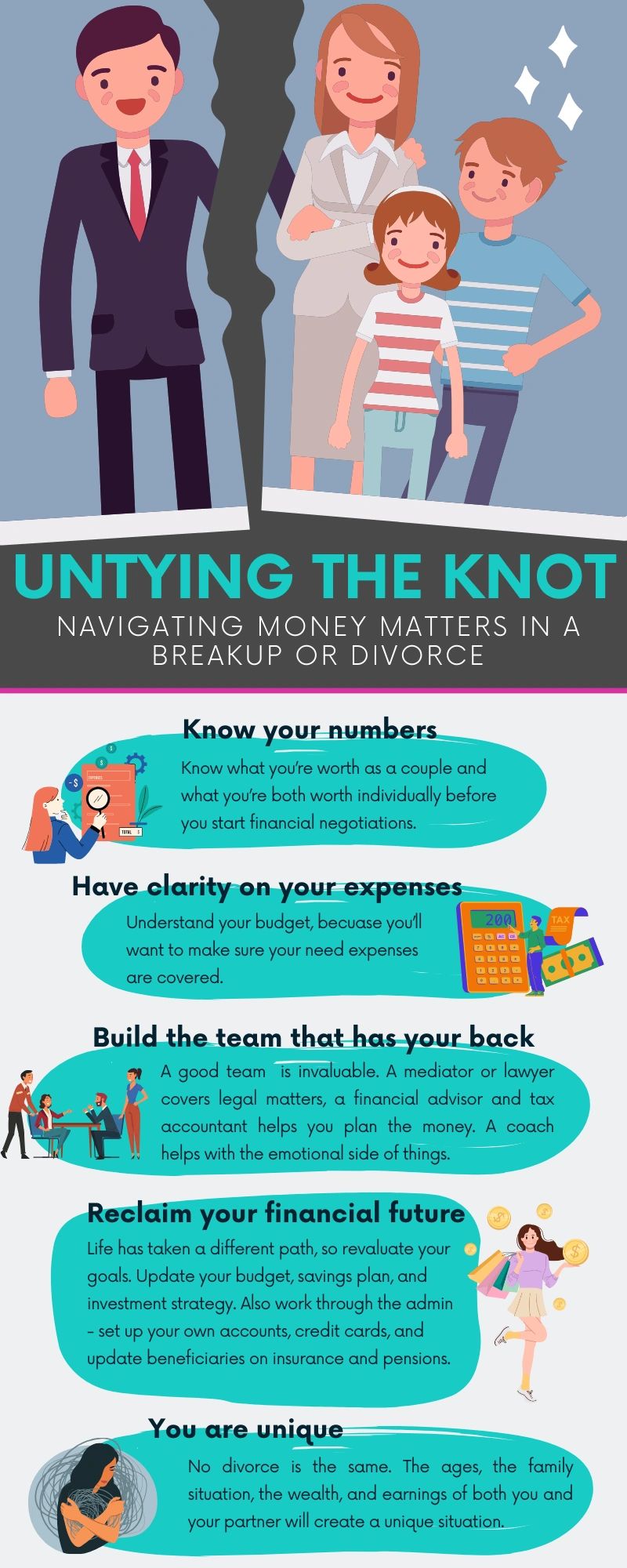
Know what you’re worth as a couple and what you’re both worth individually before you start financial negotiations. This means gathering all financial documents, including what you own, such as bank statements, property, pension accounts, tax returns, and what you owe, such a mortgage, credit card or loan documents. Create a list of all the assets, to know what the total value is.
You may need to get some assets – like property or art or jewellery valued – to determine the monetary cost. Choose someone professional and independent to help you with this.
It’s tedious, but it’s work you need to put in upfront to understand your starting point for any negotiation.
Also, while you’re doing this, understand your budget; both your “need” and your “want” expenses are important here because you’ll want to make sure that whatever the outcome of the negotiation with your partner, your “needs” are covered. So, while this may be a tedious administrative and emotionally tough exercise, do the analysis. In most countries you need to share your future income needs as part of the negotiation or divorce proceedings.
At any point throughout this process, emotions may bubble up. Shame for habits you didn’t realise you had, questions of worthiness and feelings of uncertainty over how you will make the future work. A financial coach can help you through these emotions, while also supporting you in pulling your financial position together.
Depending on the route you take, the complexity of your situation and the amount of money on the table, you’ll need either a mediator or a lawyer who specializes in divorce and family law. The latter, specifically, can provide guidance on property division, spousal support, child custody, and other legal matters. Their expertise can help protect your financial interests.
In many jurisdictions – where there is no pre-nup in the marriage – assets are divided equitably, but not necessarily equally. A lawyer can work with you to negotiate a fair distribution of assets based on your individual and shared contributions and needs. Especially if children are involved, make sure your advisor helps you understand the relevant child and spousal support guidelines. Ensure these obligations are defined clearly in your separation agreement or divorce decree.
If your financial situation is complex or contentious, it’s worth also seeking input from an independent financial advisor. They can help you work through potential forecasts, are experts across the suite of financial products – from pensions to investment accounts and more – and can help you start planning for what comes next.
A thing to be aware of when assets are being divided are the tax consequences. Selling certain assets – such a property, stocks, pensions, etc. – may incur capital gains tax. Consult with a tax advisor to minimize potential tax liabilities.
As the breakup starts to become more real, you’ll likely want to rethink through your financial set up and goals. You’ll also need to consider where you’ll need to compromise.
It’s also normal to experience a change in lifestyle; where you were previously a unit sharing costs you are now leading separate lives. So, this might mean changing the want expenses or downsizing the home. While it may be hard to hear this, consider that this is likely the case for both you and your partner.
From a purely administrative perspective, if you shared accounts, consider opening separate bank and credit card accounts. This helps establish financial independence and safeguards your credit rating.
Review and update beneficiaries on insurance policies, retirement accounts, and wills to reflect your new circumstances. Ensure your assets go to the intended recipients in case of unforeseen events.
Life has taken a different path, so revaluate your financial goals. Update your budget, savings plan, and investment strategy to align with your new circumstances and aspirations. The rule of thumb remains 50%-30%-20% into need expenses, want expenses and savings or debt repayments respectively.
It is normal to find yourself lost and overwhelmed in this situation, especially if you haven’t been used to dealing with money decisions. Consider seeking financial coaching to help rebuild your financial life. A coach can assist in budgeting, managing debt, setting new financial goals and helping you stick to the plans you’ve made.
We understand that this is challenging time emotionally and – often – unchartered territory. What’s important to remember is that your situation is unique. No divorce is the same. The ages, the family situation, the wealth, and earnings of both you and your partner will create a unique and nuanced situation that you both need to find a solution for.
As we’ve said, they key to achieving a solution and setting yourself up after the breakup, is finding the right team that have your back. Each with their set of skills and expertise: a mediator or lawyer, a financial advisor an accountant and a financial coach that can help you through the emotions and hold you to account as you rediscover your financial independence.
To help you get through this, we’ve created Aila. She can put you in touch with a vetted network of Coaches and Advisors to help you when you need.
Untying the knot is hard on your emotions and your finances. Recognise that your situation and your emotions are unlike anyone else’s. That being said, turbulence can be expected. So, build your advisory team to help you through this transition.
So if you’d like help, book a session with a financial coach or advisor to get the support you deserve. And try Aila now to get personalised prompts on how to manage your money in line with your life goals.
Follow Aila's social media for more money tips:
Download Aila and start building better money habits with personalised guidance, action tracking, and expert support.
Download Aila Free