

Responsibility. It really hits you when you see your newborn for the first time in your house. That life is your responsibility. As are the financial responsibilities that come with your child. And then you want to give your child good financial and mental well-being.
The pressure is real. It’s overwhelming, I know. I’ve been there!
Whether you’re starting your journey or are already partway along, let’s go through the kids and cash basics: from managing the new - much higher - expenses, to saving and investing for longer-term goals, to basic administration and protection. Also, let’s not forget about all the tough decisions you’ll need to make either alone or with your partner that impact you financially, and the need to equip your little one with the habits needed to thrive.
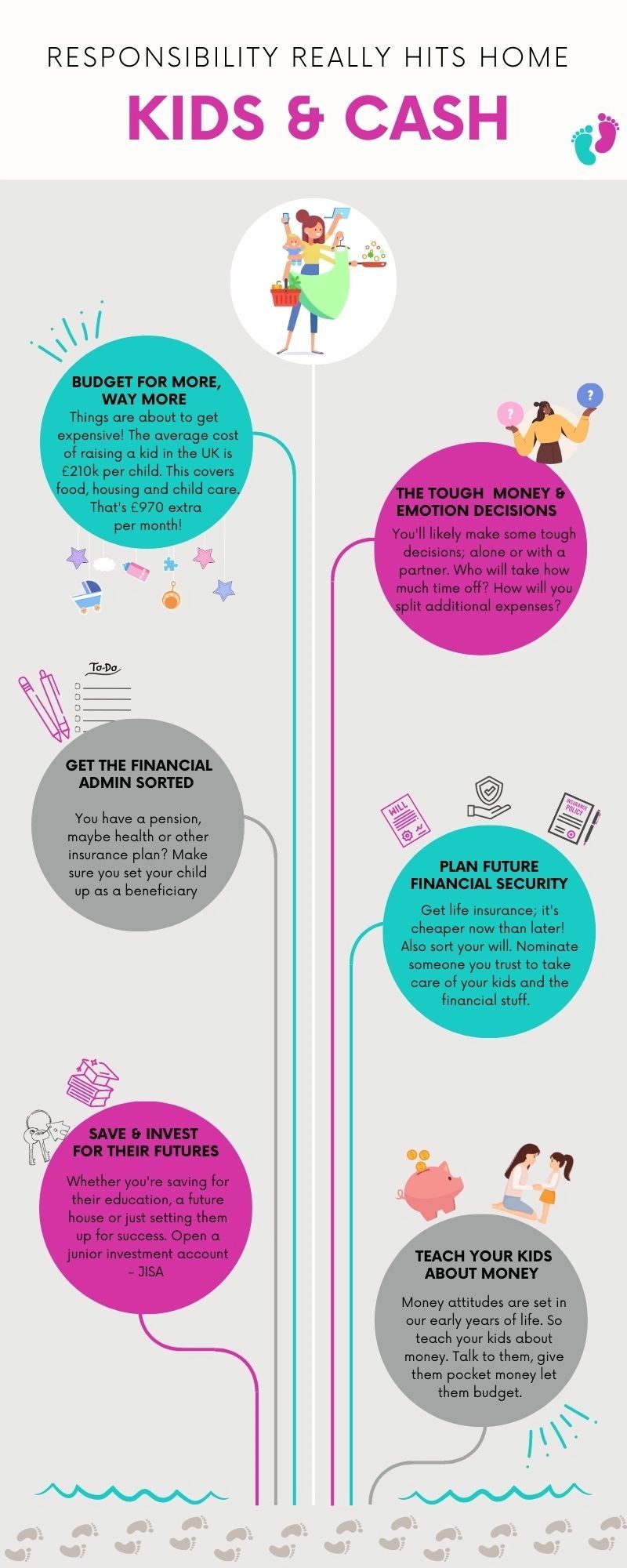
Kids are expensive. From diapers to childcare, school supplies and extracurricular activities, the expenses add up. The average cost of raising a child in the UK is between £150-£210k (2022). These numbers include food, housing and childcare. They don’t include holidays, gifts, private school and university. That’s an additional £970 per month.
To best plan, it’s worth taking stock every 6-12 months. Go back to basics, categorise “need” versus “want” expenses (forgot what this is? Read this). Then adjust your budget to meet your family's financial obligations. If raising children with a partner, ideally do this with together, so you’re on the same page about what the expenses are and can discuss how to cover them. (Read this for more info).
If you are raising your child with a partner, conversations just got harder…! Discussing tough choices, such as who will take parental leave and potentially forego pay or pension contributions as a result, the decision of whether you pay for child-care even though it eats up most of one parents’ income and how you split the rising expenses, can be challenging but essential.
Remember there are two layers to every money conversation – the one about numbers and mechanisms and then one about beliefs and values. It’s hard, but communicating openly and making joint decisions is important. By having these conversations, you set a positive example of responsible money management for your children.
Even once you've had these conversations, taking parental leave can feel hard. It may be the first time since you've started working that you haven't had an income, and this may mean dipping into savings or relying on your partner's income. Both may feel uncomfortable.
You might also be worrying that the time away from work is having an impact on your career and pay; both can be hard on you emotionally at a time of big change and sleep deprivation! Aila Coach is here to help if you need to discuss this.
Amid the excitement of parenting, it's essential to handle financial admin. Evaluate what policies you need to add your little one onto. This includes adding your child as a beneficiary to your pension plan(s). Not doing so means they won’t automatically get the money if you pass away. Similarly, if you have other insurance policies already – critical illness, life insurance etc. – remember to add your child as a beneficiary.
Do you have private health insurance? Adding your child to it is often a quick and effective option - if you and a partner have this option, it is worth evaluating which policy is best to add them to.
It's tedious and time consuming and especially early on you have so much to think about, but it’s worth getting these things sorted.
Protecting your family's financial future is a crucial part of parenting. Creating a will is a critical, thoughtful step that allows you to outline your wishes and make sure your children's well-being in the event of the unexpected. While a will is about how you want to deal with the assets and wealth you own, it’s worth speaking to your partner about your choices; especially if you’re asking them to be the person who manages the money when you’re gone. Equally, it’s important that you both align on who will take care of you children and any money or assets you leave in case you both pass away. These are tough, but necessary conversations and a financial coach is well placed to help.
In addition, consider getting life insurance or income protection coverage to provide financial support for your family if you're no longer there or able to do so.
By taking these steps, you create a safety net for your loved ones.
For the long-term life goals, you’d like for your child such as university, regularly set aside money for your child. Consider opening a stocks and shared Junior Individual Savings Account (JISA) to save for their future. This tax-efficient account allows you to invest on behalf of your child. The great things about a JISA, is that anyone can contribute to it; so, where you might not have the financial ability, speak with grandparents if appropriate.
Having a JISA gives you the opportunity to – when they’re old enough – speak to your child about financial goals and watch their investment and savings grow.
Our money habits are set by the age of 7. Yes, 7. By age 3 kids can grasp basic money concepts. So, as parents, we have a crazy and unique opportunity to teach our children healthy money habits. Age-appropriate conversations about money, are a good place to start. Answer curious questions and help them understand money’s value. Pocket money teaches children about budgeting and spending responsibly. Buy a piggy bank so they can see and feel their money grow as the pig gets heavier.
As kids grow older, pay them for small tasks like mowing the lawn, or encourage them to sell used toys or clothes at a flea market. This gives you a great opportunity to talk about the value of money, as well as concepts like budgeting, and the importance of saving for the future.
When the time is right, teach them about investing and the power of compound growth. Financial education equips your kids with lifelong skills that will serve them well.
Doing this may also shine some light on your relationship with money and money habits. Do your current habits still suit you? Do you want help to bring about change for you to help teach your children by example?
If you’re already a parent and feel like you haven’t done enough or know you could be doing more, don’t beat yourself up. It’s never too late to start! And we are here to help!
Yes, the responsibility grows and sometimes feels overwhelming!
By getting your “money house” in order, role-modelling and teaching your kids about money, you’re giving yourself and them a strong financial foundation from which to grow.
It’s also never too late to start this money conversation with your kids. And if you need help, book a session with Aila Coach to get the support you deserve.
Try Aila now to get personalised tips on how to manage your money in line with your life goals.
Follow Aila's social media for more money tips:
Download Aila and start building better money habits with personalised guidance, action tracking, and expert support.
Download Aila Free