
.webp)
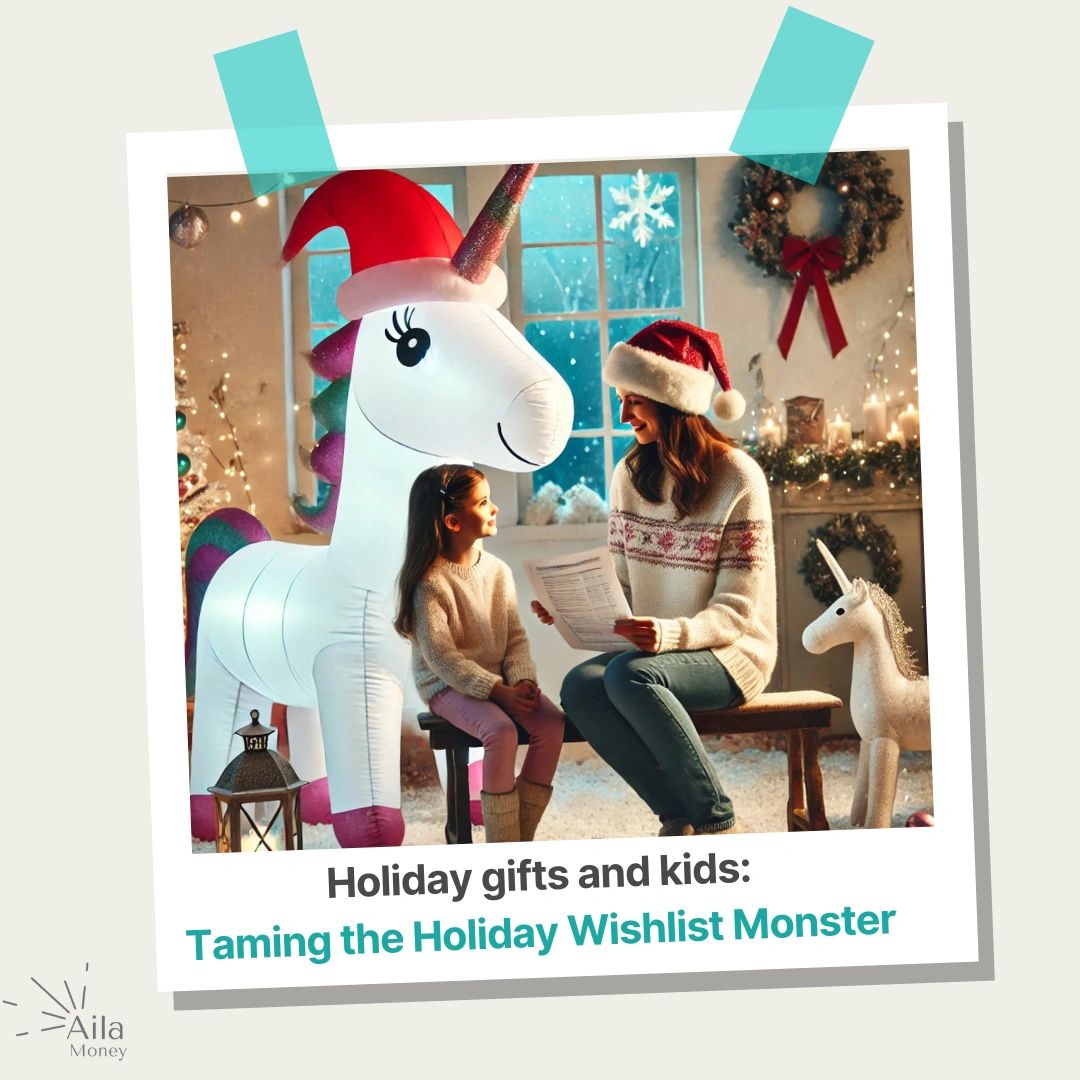
Ah, the holidays — lights are twinkling, cookies are baking, and kids are busy crafting epic wish lists that rival Santa's naughty-and-nice log. But let’s get real: those lists? They’re long. And expensive. And stress-inducing. So how do we handle it without turning into the Grinch?
Whether you’re knee-deep in wrapping paper or blissfully kid-free, here’s a question: have you talked to your kids about money? And did your parents ever talk to you about money when you were young?
If the answer’s no, you’re not alone. But why, you’re thinking…? Well, research says kids start forming money attitudes by age 7. Yep, before they’ve even mastered the art of tying their shoes, they’re fully capable of grasping basic money concepts. Your kids may be young, but they are way savvier than we adults give them credit for. So, why not use this festive (and let’s face it, financially stressful) season to start the conversation and better prepare them for the “real world”.
No matter your kids’ ages, discuss the realities of gift-giving. Instead of letting wish lists grow into novels, sit your kids down for a little heart-to-heart about how gift-giving works. Spoiler alert: Santa doesn’t foot the bill for everything. And if in your house he does, then even Santa and his elves must put in a lot of hard work into earning the money needed to provide those lovely presents.
Here’s a fun approach:
Want to play the long game? Consider gifting your kid a small, regular allowance. This way they can begin earning, saving, and developing responsible money habits. Once they have money of their own, they’ll understand the necessity of budgeting, and in turn, understand why getting multiple presents at Christmas every year may be unrealistic.
How it works:
Another way to support your child’s financial journey this festive season is to open a savings account for and with them. Plant the metaphorical money tree by explaining interest like growing a garden: save the seeds, water them (deposit regularly), and watch them grow. They’ll be saving for that high-ticket wish list item in no time.
There are, of course, a variety savings accounts for children (for some options, have a look here or here). It’s a great way to begin explaining to your child how a bank works, how interest rates and interest payments work, and also how they can deposit and withdraw funds as needed.
You’ll be thinking: what sorts of things should they withdraw the money for?
Here’s the deal: once it’s their money, let them call the shots. A huge part of the learning curve is the autonomy that comes with decision making about saving and spending. While your guidance is crucial, ultimately, they should be able to use their money as they see fit. Yes, they’ll make mistakes (probably spend half their savings on something ridiculous), but who ever really learned anything without making mistakes along the way?
The holidays are stressful enough without gift-induced guilt trips. So, take a deep breath, sip some cocoa, and use this season to teach your kids something priceless: how to manage money.
And hey, if all else fails, you can always blame Santa for not delivering that giant inflatable unicorn. 😉
Need help thinking through you festive budget - check out Ask Aila Anything and if you’re keen to get a handle on your budget and finances try Aila now.
Thank you to Caroline Teare for contributing this blog. 🫶💫
Follow Aila's social media for more money tips:
Download Aila and start building better money habits with personalised guidance, action tracking, and expert support.
Download Aila Free