

⚖️ Exactly 50 years ago this week, UK law changed to finally allow women to open a bank account or take out a mortgage in their own name; without needing a husband's or father's permission. (The Sex Discrimination Act 1975 received Royal Assent on 12 November 1975.)
🔷 This week also marked Equal Pay Day; the point in the year where, due to the 14% gender pay gap, women effectively stop getting paid compared to men.
We’ve come a long way.
💪 We own homes. We lead companies. We run our finances.
Some of the progress we’ve made:
✔️ The proportion of sole female mortgage applicants rose from 36% in 2020 to 41% in 2024.
✔️ More women than ever are building wealth, managing property, and leading financial decisions in their households.
✔️ Women in the UK collectively control over £1.3 trillion in wealth and growing.
🔷 The gender pay gap still exists - currently 14%
💰 And what’s more, we’re still not doing enough with the money we do earn.
Only 13% of UK women are investing.
And 72% don’t feel confident to act on their finances.
Here’s the thing, it’s OK if you don’t feel confident yet.
This is still new and many of us weren’t taught this.
But we’re learning it now. Together.
With 45% of women expected to be single by 2030, the question is:
Are you engaging with your finances enough?
Even with a pay gap of 14% if we make our money work for us, we can still generate wealth...
It has been shown when women do invest they earn upto 1% more than men.
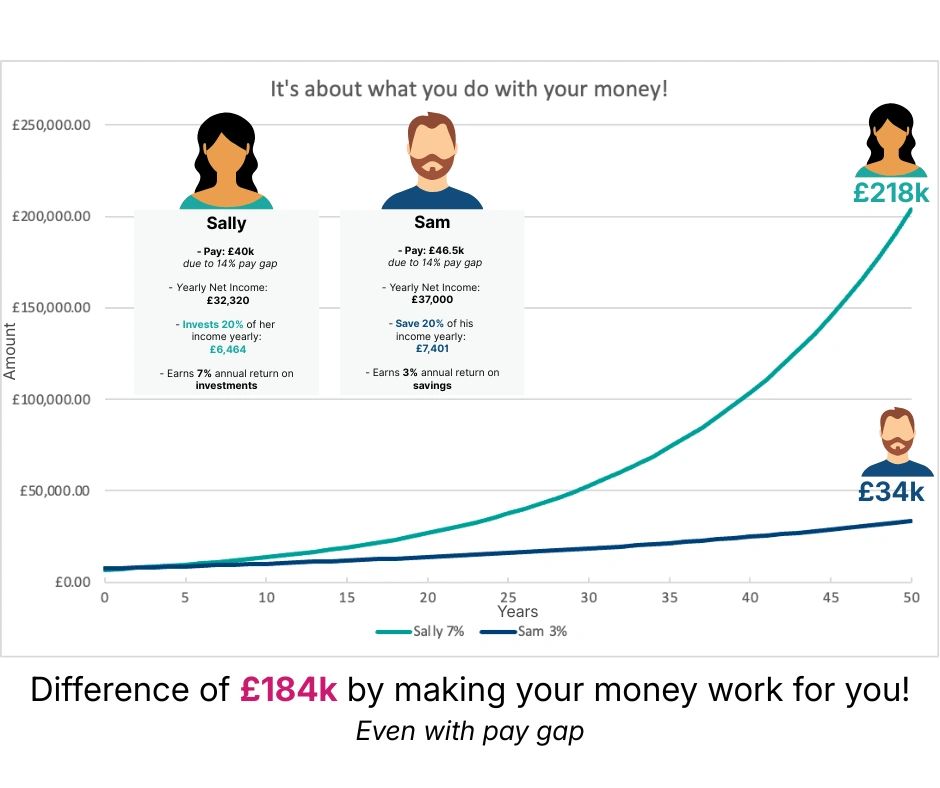
So meet Sally and Sam - Sally earns £40,000 a year and Sam earn £46,511 (a gap of 14%)
If they both put away 20% of their yearly take home income, which means Sally puts away £6,464 vs Sam's £7,401. How Sally chooses to use this money matters - if she chooses to invest it whilst Sam chooses to save it the difference over time would be ~£184k in 50 years, despite him being able to put away more each year!
(based on investing average of 7% vs saving rate of 3%)
Difference in:
10 yrs: ~£3k
20 yrs: ~£13k
30 yrs: ~£34k
40 yrs: ~£79k
50 yrs: ~£184k
Why? Because investing beats saving over time. Even earning less, Sally’s money works harder.
That’s the power of compounding and making your money work as hard as you are!
We make money feel doable not overwhelming.
We don’t just teach. We help you take action. Download the free app and follow on socials for more information on courses and sessions we run!
Download Aila and start building better money habits with personalised guidance, action tracking, and expert support.
Download Aila Free